
Folic acid
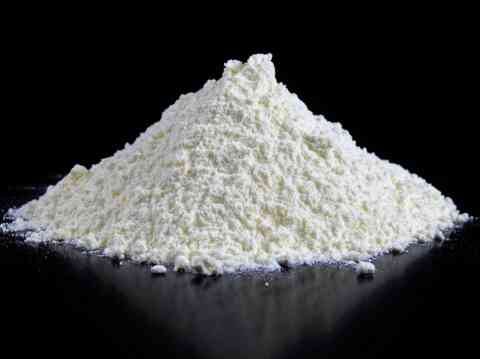
Following consultation with public health experts and medical professionals, the UK government has implemented regulation to fortify non-wholemeal, wheat flour with folic acid. This is a common fortification policy and has been in place for years in many countries, such as Australia and Canada. It has been shown to be safe and effective in reducing the incidence of severe birth defects in babies.
Fortification of UK flour with folic acid
Background
UK flour has been fortified for over 80 years. Mandatory calcium addition started in World War II to counter dietary deficiencies linked to rationing; progressive addition of iron, thiamin (vitamin B1), and niacin (vitamin B2) followed in the 1950s. In 2024 the UK government introduced new regulations to add folic acid to flour to prevent neural tube defects; non-wholemeal wheat flour needs to be fortified by late 2026.
Why folic acid addition?
Flour is fortified with folic acid in many countries, such as Australia and Canada. It has been proven as an effective way of reducing neural tube defects in babies.
Neural tube defects can cause serious birth defects including to the brain, spine, or spinal cord from incomplete closure of the neural tube in early pregnancy, these are most commonly spina bifida (split spine) and anencephaly (no brain/skull). These result in lifelong disabilities.
In the UK, it is estimated that fortifying non-wholemeal wheat flour with folic acid will reduce neural tube defects by around 20%, preventing around 200 cases of serious brain and spinal problems every year.
The advantage of wheat flour fortification compared with fortifying other foods is that wheat flour is widely consumed in some form or other by most people.
Study and consultation
The potential option to fortify non-wholemeal flour with folic acid has a long history. It was originally discussed back in the 1990s and first recommended by the UK’s Scientific Advisory Committee on Nutrition (SACN) in 2006, after a comprehensive review of the evidence. A more recent review by SACN in 2017 continued to confirm the that folic acid fortification of flour is both effective in reducing neural tube defects and safe for the population as a whole. On this basis, the government and devolved administrations of Scotland, Wales, and Northern Ireland reached a consensus to proceed with the policy.
Further details regarding the evidence review can be found at the following page of the Food Standards Agency website:
https://www.food.gov.uk/safety-hygiene/folic-acid
The transition
Following the government decision to fortify flour with folic acid, the UK flour milling sector has been working to implement this public health initiative. Non-wholemeal wheat flour will be fortified with 0.25 milligrams of folic acid per 100 grams of flour.
The regulations set a 24-month transition period ending December 13, 2026 to allow the food industry time to adjust manufacturing processes and labelling.
What does the fortification requirement apply to?
Non-wholemeal wheat flour (i.e. white and brown wheat flour) will be fortified with folic acid. Wholemeal wheat flour is not required to be fortified with folic acid, nor are non-wheat flours, such as maize flour, rice flour, spelt flour and others.
More information is available here: